
Bristol Hannover Council
Bridging Bristol and Koenigsberg
** On Tuesday, January 20, BHC and BAGS held a joint talk about the Bridges of Bristol and the Koenigsberg Problem. The talk was given by Jeff Lucas a local author who has written a book on the subject.
Koenigsberg(the present day Russian exclave of Kaliningrad) was a vibrant centre of intellectual study in medieval Germany. The German city was built on two islands created by a river with several crossings between the islands and the surrounding country. It became a diverting pastime for the citizens to see if they could walk across all the bridges but only once.
The problem ‘went’ viral in the 18th century and was eventually solved by the famous mathematician Leonhard Euler who in the process founded a new branch of mathematics now seen as essential for modern life.
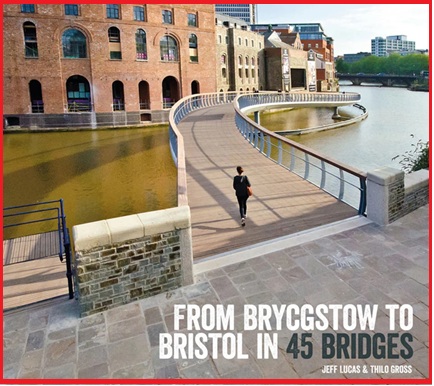
Euler demonstrated mathematically that it was impossible to solve the Koenigsberg problem. Fast forward to the 21st century and a German professor, then at Bristol University called Thilo Gross decided to apply the theory to Bristol’s 45 bridges. Jeff Lucas then co-authored a book with him describing how the bridges could all be crossed – unlike in Koenigsberg – without re-crossing.
The Koenigsberg bridge problem was an intriguing introduction to a tour of Bristol’s bridges which yielded fascinating insights into history, geography, engineering and politics.
Jeff showed how the bridges were built to address the developing needs of Bristol as a city through the ages. The city was built on a river which became an important artery for trade but also a key part of its defences. To develop the trade the city fathers created a ‘floating harbour’ to enable ships to stay upright and afloat on the water despite the tidal nature of the Avon and this created a need for new bridges.
With the Industrial Revolution came bridges made of cast iron and then steel. You could even order bridges from a catalogue in Victorian times! When the railways came to Bristol more bridges were needed and when the age of the motor car dawned in the 20th century bridges had to be built to help the flow of traffic into the city along the new Portway.
Finally, the post-industrial age from the 1980s onwards, created the need to repurpose some of the older bridges as well as develop more innovative new designs, some of them quite striking. Bridges however have always been controversial and Jeff’s lively talk ended with some stories from history of how tolls provoked rioting and a massacre in the 18th century.
IAN TURNER


